Two features set Puri Aerosphere apart in the developer's material: a "green spine" of planted terraces running up the towers, and LEED pre-certification. Both are easy to mention in a brochure. This article explains what each one is, what it changes for the people who will use the building, and which questions to ask before giving either much weight.
What the green spine is
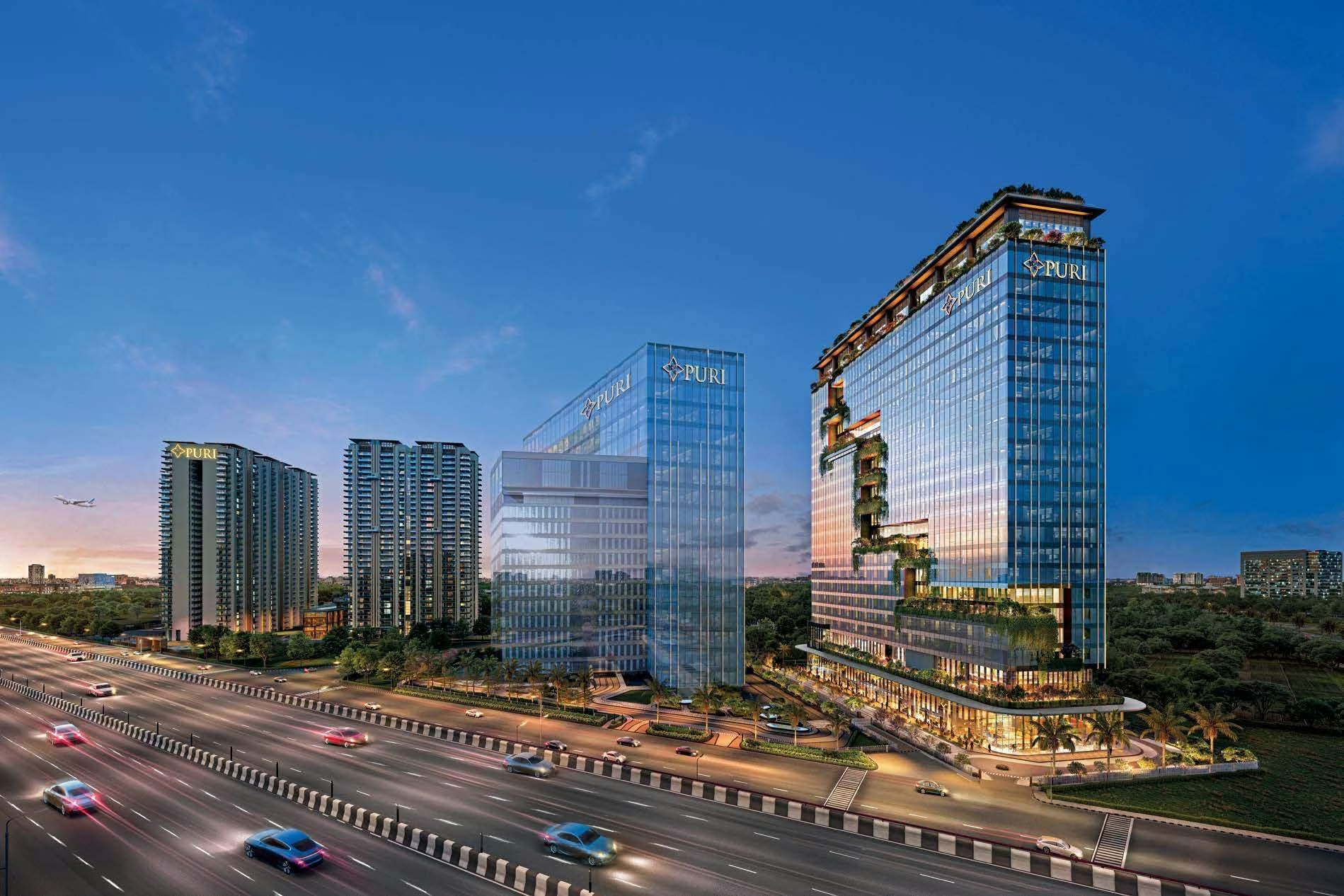
In every published elevation, the glass facade of each tower is broken by a series of recessed terraces that step up and across the building. The terraces are planted, so from the expressway the towers read as glass boxes with a zig-zag band of greenery climbing through them. That band is the green spine.
Architecturally, the terraces do three jobs. They break up a large glass surface so it does not read as one flat wall. They give some floors direct access to an outdoor space, which is rare in office buildings in the NCR. And they add shade to the glazing immediately below and beside them, which reduces the heat reaching the office floors on those sides.
Who gets to use the terraces
This is the first practical question to ask. A terrace can be common area open to all occupiers of the tower, part of a specific unit, or a landscaped feature with no public access at all. On the published second-floor plan, four of the end units have a balcony or terrace marked against them. Whether upper-level terraces are shared or tied to units is not stated in the material we have seen. Ask the sales team to mark on the plan which terraces belong to which floor and how they are accessed.
The second question is maintenance. Planted terraces need irrigation, waterproofing and regular upkeep. Those costs sit in the common area maintenance charge. Ask how they are budgeted.
What LEED pre-certification means
LEED is a green building rating system run by the US Green Building Council and administered in India through GBCI. A building earns points across energy performance, water use, materials, indoor air quality and site planning, and is certified at one of four levels: Certified, Silver, Gold or Platinum.
Pre-certification is a step available to developers of core and shell buildings. It is awarded on the design intent, before construction. It tells tenants that the project has been designed to meet LEED criteria and is registered to pursue certification. It is not the final certificate. That comes after construction is complete, based on the building as built and documented.
So the right questions are:
- Which LEED rating system and version is the project registered under?
- What level (Silver, Gold or Platinum) is the pre-certification at?
- Does the developer commit in writing to pursuing final certification?
Why it matters to an owner
For an investor who plans to lease the space, LEED status is mostly about the tenant pool. Many multinational occupiers and larger Indian companies now have sustainability reporting obligations, and some screen out buildings without a green rating. A certified building is simply eligible for more tenants.
For an owner-occupier, the benefits are operational: lower energy and water consumption, better indoor air and daylight on the floors. The size of those savings depends on how the building is actually run after handover, which is outside the rating itself.
Orientation and heat
In Gurgaon, the west and south faces of a glass building take the most heat, particularly between April and June. Shading on those faces does more for cooling cost than almost any other design choice. When you look at a specific floor, find which way your unit faces and whether a terrace sits above or beside it. A unit shaded by the terrace on the floor above will be cooler in the afternoon than one on a flat stretch of glass.
What neither feature tells you
Neither the green spine nor the rating says anything about the floor-to-floor height, the floor loading, the power available per square foot or the air-conditioning hours. These are the points that decide whether an office works for a particular business, and none of them is published yet. Our specifications page lists what is confirmed and what to ask for in writing.
In short
The terraces are a real design feature with practical benefits for shade and outdoor space, provided the access and maintenance arrangements are clear. LEED pre-certification is a statement of design intent that widens the tenant pool once it becomes a final certificate. Both are worth having. Neither replaces the basic checks on area, services and price. You can see the terraces in the gallery, and the amenities page lists what else the building provides.